
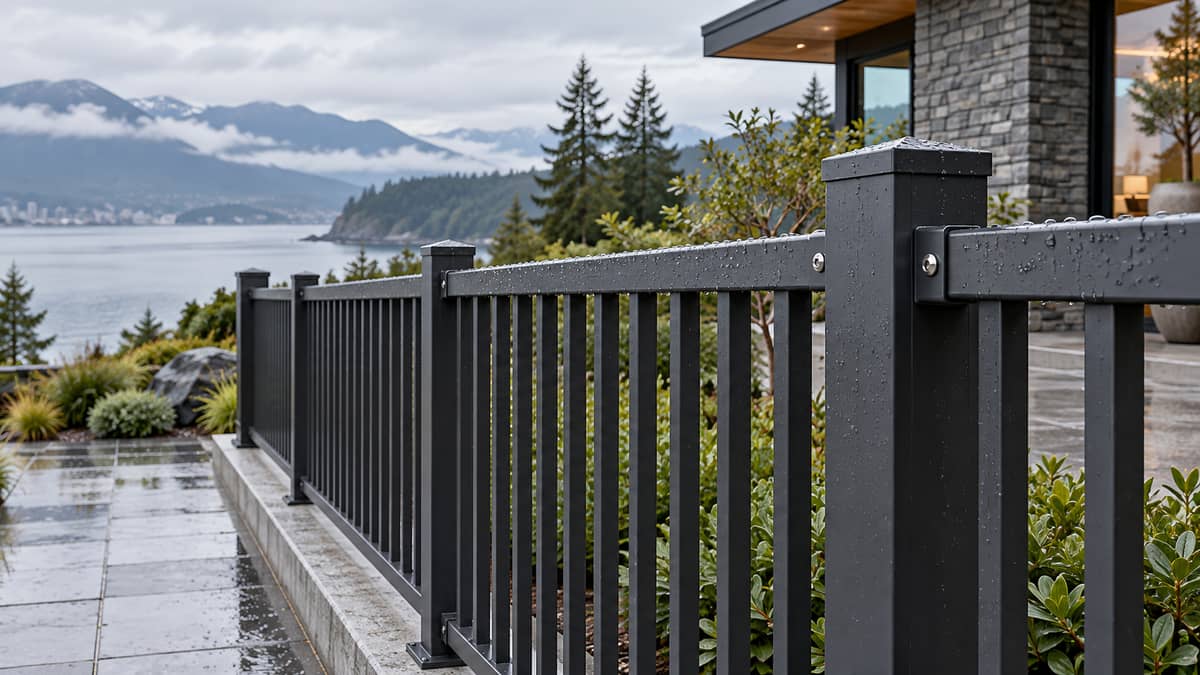
Aluminum fencing does not develop the reddish iron rust associated with steel. It can still corrode, and a coastal location makes the finish, fasteners and installation details important. For a Metro Vancouver fence, the right question is how the complete fence handles moisture and salt—not whether aluminum is completely immune to weather.
Rust and corrosion are different
Rust is a form of corrosion involving iron. Aluminum behaves differently: its surface forms a thin oxide layer that helps protect the metal underneath.
That protection has limits. Salt deposits, damaged coatings and moisture trapped around connections can contribute to deterioration. White or chalky deposits, bubbling finish and deterioration around a joint deserve a closer look rather than being dismissed because the main material is aluminum.
A fence also contains more than its panels. Hinges, latches, screws and other hardware may use different materials, so a rust stain does not necessarily mean the aluminum itself is rusting.
Coastal exposure varies across a property
A fence near salt spray faces a different exposure from one farther inland. Sheltered surfaces can retain deposits because rain does not rinse them as readily. Irrigation spray and soil piled against the fence can also keep parts wet.
Walk the proposed fence line before choosing details. Notice drainage, landscaping and places where leaves collect. Gates need particular attention because moving hardware has to keep working as well as look good.
Keeping soil and vegetation away from connections gives you room to inspect and clean them. It also makes developing problems easier to spot.
Specify the finish and connections together
An exterior finish helps protect the surface, but the quality of a fence depends on more than its colour. Ask what finish is proposed, how exposed edges are treated and what maintenance instructions apply.
Fasteners and adjacent metals must be compatible with the assembly. Certain metal combinations in wet conditions can accelerate corrosion, so connection details should be selected deliberately rather than using whatever hardware is available.
Drainage matters too. Components should not be arranged to hold water where the design requires it to escape. Posts, panel connections and gate hardware all belong in the discussion.
Give the fence simple, regular attention
Use the cleaning method recommended for the selected finish. Gentle washing can remove accumulated dirt and salt; abrasive pads and harsh chemicals may damage the coating instead.
Check for scratches, loose connections and gates that begin dragging or latching poorly. Addressing a coating defect or alignment problem early is more useful than waiting until the affected area grows.
Do not cover corrosion with paint without understanding its cause. Photograph the area and ask about the appropriate repair for that component and finish.
Planning an LDH fence for local conditions
Darren and his team at LDH Aluminum Ltd. create custom-designed and manufactured fencing for Langley and Metro Vancouver properties. Their composite and aluminum fencing can be planned alongside custom gates so the layout and moving parts work together.
Bring information about the site's exposure, drainage and existing exterior finishes. Those details help guide a practical design rather than a material-only comparison.
Coastal Aluminum Fencing FAQs
Can an aluminum fence have rusty screws?
Yes. Hardware may contain iron even when the main fence is aluminum.
Does rain replace cleaning?
Not reliably. Sheltered joints and surfaces can retain dirt and salt deposits.
Is powder coating indestructible?
No. Scratches, unsuitable cleaners and other damage can compromise a finish.
Should I be concerned about a loose gate hinge?
Yes. It can affect alignment and place extra stress on the gate and connections.
Talk with Darren about your fence
Call 604-762-7246 or book a free quote and consultation with Darren to discuss your Metro Vancouver project.