
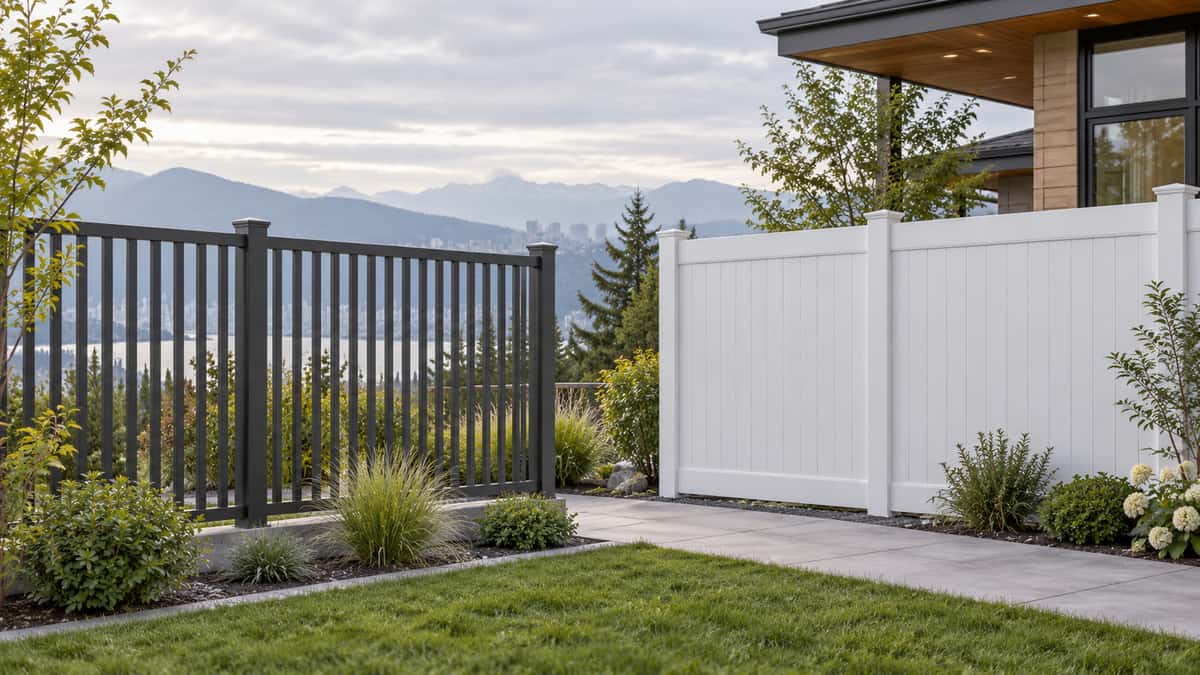
Neither aluminum nor vinyl has a guaranteed lifespan simply because of the material name. Aluminum does not develop iron rust, while vinyl does not rot like wood; the actual fence still depends on its construction, supports and exposure. In Vancouver weather, compare the finish, panel design, gate hardware and repair options before choosing.
Rain resistance is only part of durability
Both materials can avoid some maintenance associated with a wood fence, but wet conditions still expose weaknesses in the complete assembly. Poor drainage, unstable posts and trapped debris can create problems regardless of what the panels are made from.
For aluminum, examine the exterior finish and connections. For vinyl, ask about the profile, reinforcement and how the panels are supported. A material label does not explain how a long section will resist movement.
The ground matters as well. If posts move, a fence may lean or a gate may bind even when the panels remain sound.
Temperature and wind affect the design
Vinyl components expand and contract with temperature changes. They need the clearances and support specified for the chosen design. Poorly accommodated movement can affect fit and alignment.
Aluminum also moves with temperature, so connection details still matter. Do not assume a metal fence can be fixed in any arrangement without considering that movement.
Wind exposure is strongly affected by openness. A solid privacy fence presents a different load from an open picket fence, whether it is made from aluminum or vinyl. Compare similar heights and privacy levels when assessing the two options.
Gates reveal weaknesses early
A fence panel stays in one place; a gate is repeatedly opened, closed and latched. Its weight, width, hinge arrangement and post support all affect how well it operates.
Ask how a proposed gate will be supported and adjusted. A wide opening may need a different design from a narrow pedestrian entrance. A gate that starts dragging should be checked rather than forced shut every day.
LDH's custom aluminum gates can be designed with the fence so entrances are part of the original plan rather than an awkward addition.
Compare upkeep and repair options
Vinyl generally avoids wood-style staining, but it still needs cleaning and can be damaged. Aluminum finishes also need appropriate cleaning and inspection for scratches or wear.
Ask what happens if one panel, hinge or post needs replacement. Component availability, how sections connect and access to the damaged area can all influence the repair. Those are useful questions before buying, not just after an impact or storm.
There is no honest single lifespan figure that covers every vinyl fence or aluminum fence. A detailed specification is more informative than a broad promise about how many years a material lasts.
Discuss aluminum options with LDH
LDH Aluminum Ltd. specializes in custom-designed and manufactured aluminum work, not vinyl fencing. Darren and his team work with homeowners and contractors in Langley and Metro Vancouver to plan the layout, finish and entrances together.
Explore composite and aluminum fencing if you want to compare an open aluminum design with a composite-panel privacy design. Bring your fence dimensions, photographs and budget so Darren can discuss an appropriate scope.
Aluminum and Vinyl Fence Durability FAQs
Does aluminum rust like steel?
No, although aluminum and its coating can still deteriorate under unsuitable conditions.
Is vinyl maintenance-free?
No. Cleaning, damaged components and gate alignment still need attention.
Which material handles wind better?
That depends on panel openness, height, supports and the specific fence design.
Does LDH install vinyl fencing?
LDH focuses on aluminum and composite/aluminum fencing rather than vinyl.
Get a project-specific fence quote
Call Darren at 604-762-7246 or request a free quote and consultation for your Metro Vancouver property.